
How many restrooms does a race need?
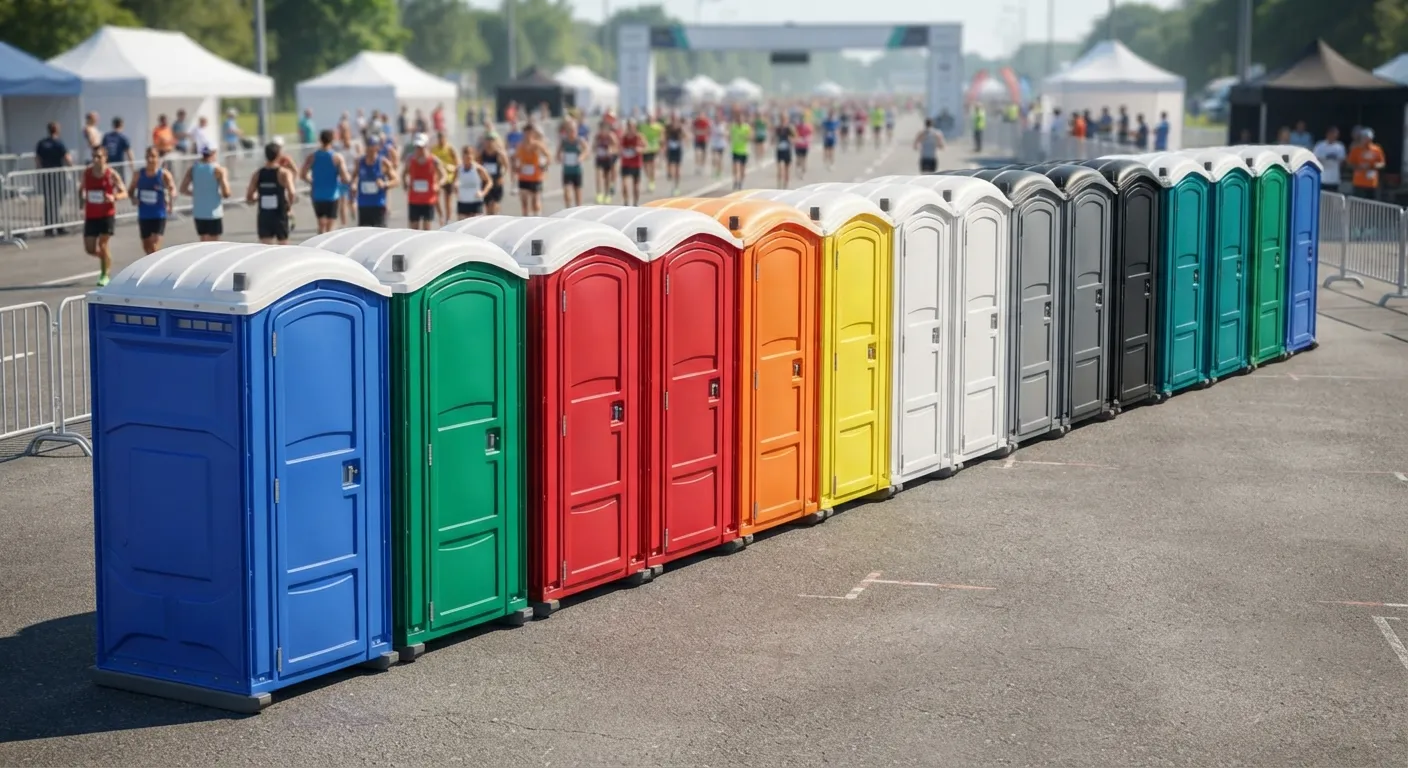
Start with your runner count, then add spectators and volunteers separately, because they cluster differently than the field does. OSHA 1926.51(c) sets a baseline of 1 toilet for 20 workers on a job site, and while a race isn't a construction crew, race directors use the same ratio logic for start-line corrals: one unit per 50 to 75 people keeps lines under five minutes at a mass start. Course-side units matter more than people expect. A half marathon course with three water stations usually needs a bank of units at each one, not just at the finish. For a Huntington Beach coastal route, that could mean placements near the pier area and along a bike path stretch, spaced so no runner walks more than a few minutes off course to find one. Standard portable toilet rental covers most of this need at day rates that beat renting for a full week you don't use. If your race draws a big spectator crowd, pair standard units with at least one ADA accessible porta potty per cluster, since ADA Standards section 213.2 requires at least one accessible unit, and 5 percent of the total, wherever single-user toilets are grouped. Our how many porta potties do I need guide walks through the math for start line, finish line and mid-course zones separately.
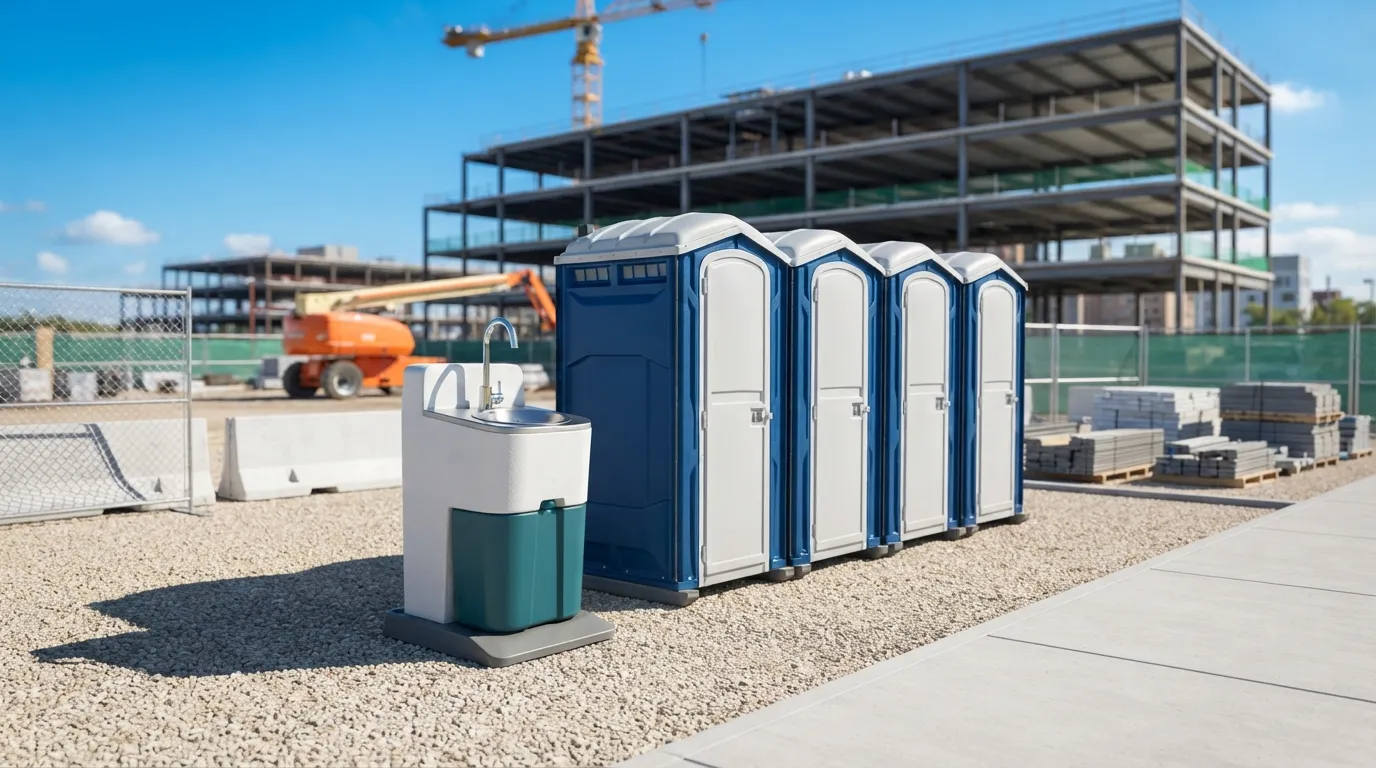
Timing matters too. Most races run water tables and finish-line food stations, and those tables need washup capacity nearby, not just for runners but for the volunteers handling food. A handwashing station rental placed at each aid station covers that without pulling volunteers away from their post. 29 CFR 1910.141(d)(2) requires soap and towels or a hand-drying device at wash stations, since sanitizer alone doesn't meet that standard, so we stock real soap and paper towel dispensers, not just gel bottles.
What about power for timing equipment and lighting?
Races that start before sunrise or finish after dark need lit staging areas, and timing tents pull real power. A generator and a light tower rental cover the finish chute, but if you're running a longer power drop to a start line tent or a med station, a temporary power pole is often the cleaner solution. Setting one takes more than just standing it up: crews anchor the pole base into compacted soil or a concrete pad, then run guy wires or a brace kit to the pole where cable weight and wind load could pull it off plumb, especially along an open beach corridor where gusts run steady most mornings. That's how to brace a temporary power pole correctly: anchor first, brace second, then load it. A pole that isn't braced can lean under the pull of a heavy extension run, so we check plumb before we hand off power to your timing vendor. OSHA 1926.404(b)(1)(ii) requires ground fault circuit interrupter protection on temporary power at outdoor events, and we build that into every drop regardless of whether it's a five-hour 5K or a two-day festival build.
Course barricades matter just as much as power. Runners peel off course when barriers aren't clear, and OSHA 1926.202 calls for barricades that meet ANSI D6.1, which is the same standard we use whether it's a temporary fence rental job or a crowd control barrier rental for a finish chute funnel. Races in Huntington Beach that route along the bike path often need low-profile barrier rather than full chain link, since a solid fence line can block beach access for residents mid-race.
Where should restrooms go on race day?
Restrooms belong at the start corral, every aid station, and the finish festival area, spaced so lines clear between waves. A porta potty placement guide matters more for races than for static job sites, because your crowd moves through the course in waves rather than sitting in one spot all day.
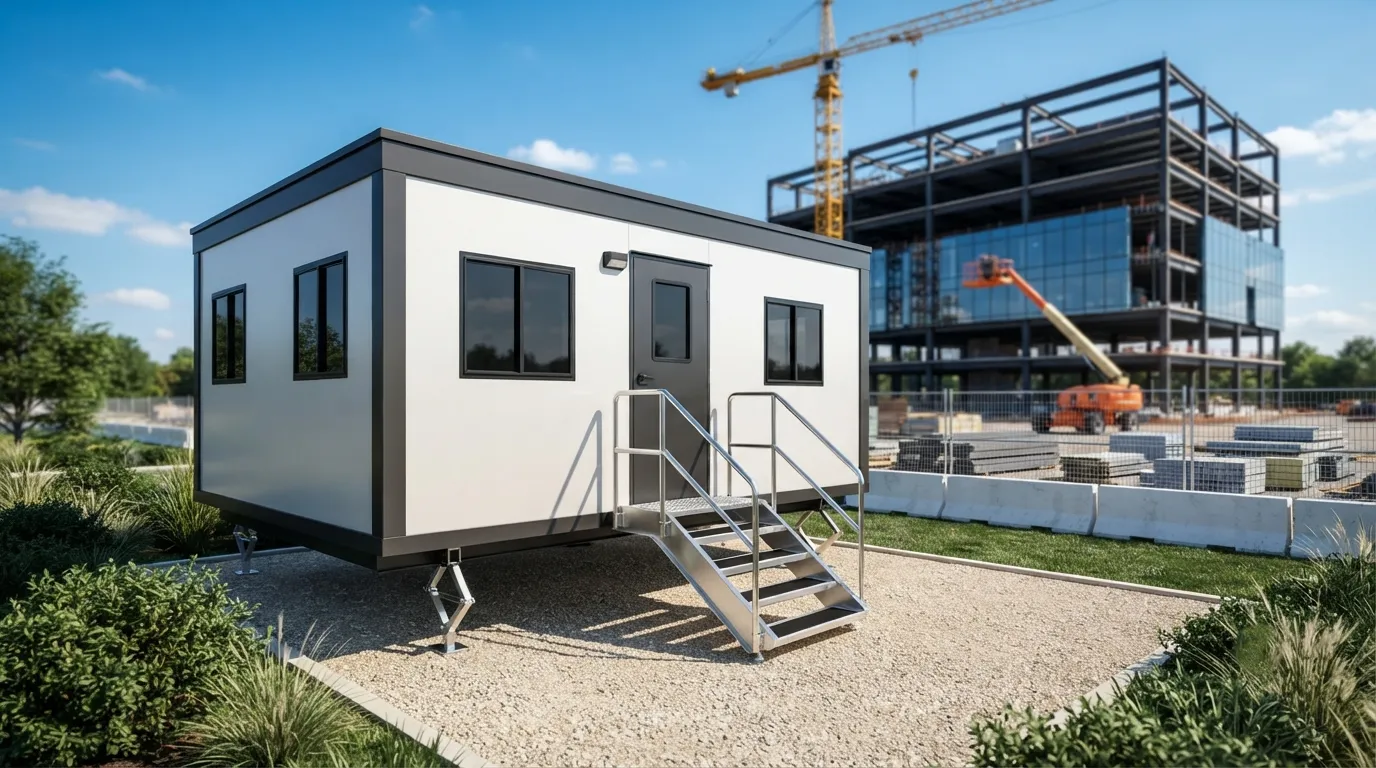
Placement also depends on how far your delivery truck can reach. A roll-off or trailer delivery needs about 60 feet of straight clearance behind the truck, which rules out tight boardwalk alleys or narrow beach access points as staging spots. If your finish line sits near the pier, expect our crew to stage restrooms and a restroom trailer rental unit on the closest street with truck access, then walk hoses or extension cords the rest of the way. For races that draw a big post-run crowd with food trucks and a beer garden, an 8 stall restroom trailer at the festival area handles volume better than a bank of standard units, and it doesn't need a five-minute wait line photographed for social media. Races based further out, like a course that loops toward Midway City 4.4 miles north, still route their sanitation planning through our Huntington Beach dispatch, so travel time doesn't change your placement options.
How far in advance should we book race restrooms?
Book as soon as your course map and runner count are set, ideally 60 to 90 days out for a race over 500 runners. Late bookings still happen, and our emergency porta potty rental line covers last-minute adds, but early booking locks in unit count before other Huntington Beach weekend events compete for the same trucks.
Do we need ADA units even for a small local race?
Yes. ADA Standards section 213.2 requires at least one accessible unit per cluster regardless of race size, and races with wheelchair or adaptive divisions need more than the minimum near the start and finish.
Can restrooms be moved mid-race if the course changes?
Not easily once units are placed and serviced for the day. Tell us about tentative course changes during planning, covered in our porta potty rental checklist, so we stage flexible spots instead of locked-in placements.
What does race-day restroom rental typically cost?
Standard units run in an event-day range, often quoted per event rather than per day for race weekends. See porta potty rental cost for the current bands, since a 5K and a marathon festival draw very different unit counts.
Do volunteers need a separate handwashing station from runners?
Yes, especially at food and water stations. 29 CFR 1910.141(d)(2) requires soap and towels at wash stations, so we place a dedicated portable sink rental at each aid station for volunteer use apart from runner-facing units.
Next step
Get a delivery date
Tell us the address, the dates and the headcount. We size the order and confirm the route.