
How Often Does a Septic Tank Need Cleaning?
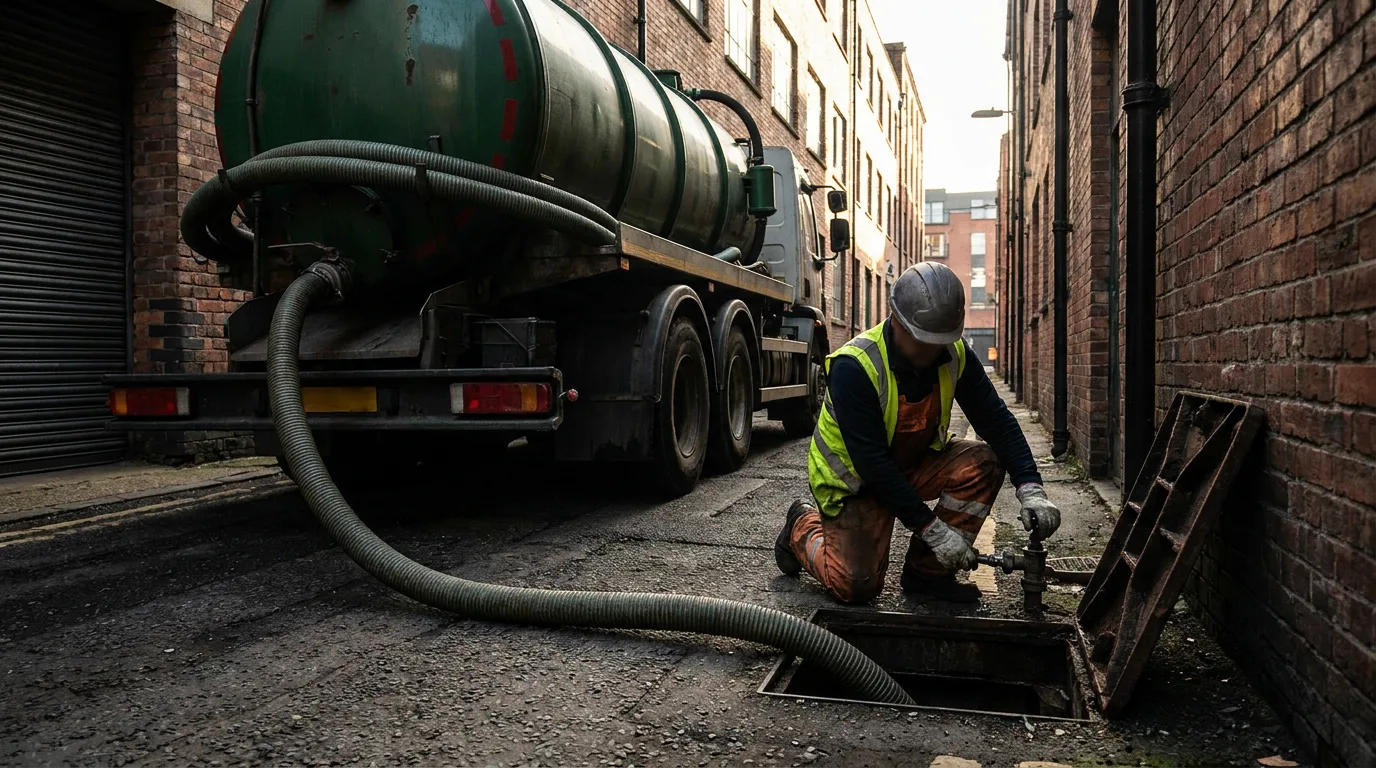
Three to five years is the standard interval for most homes, but it swings based on how many people live there and how much water goes down the drain. A house full of teenagers running laundry daily will fill a tank faster than a couple living alone, similar to how a busy portable restroom rental site sees faster turnover than a quiet one. Tank size matters too. If yours is undersized for the household, you will be scheduling septic pumping service more often than the neighbor down the street. Garbage disposals push solids into the tank faster, which shortens the interval. If you are not sure where your tank falls in that range, septic tank warning signs can tell you more than a calendar can. Businesses running commercial kitchens have a different clock entirely: a grease interceptor gets pumped once fats, oils, grease and solids reach 25 percent of the liquid depth, not on a fixed yearly schedule. That is a separate system from a residential septic tank, and it needs its own inspection routine, covered under grease trap pumping.
What Happens If I Wait Too Long?
Waiting past the 3 to 5 year window risks a backup, and backups are expensive compared to routine pumping, the same logic that applies to skipping scheduled septic tank cleaning. Solids that should stay in the tank start moving into the drain field once the tank fills past capacity. Once that happens, you are not looking at a simple pump-out anymore, you are looking at drain field repair, which costs far more and takes longer to fix. Slow drains, gurgling pipes and standing water near the tank are all early warnings, the kind of thing covered in more detail under septic tank warning signs and porta potty warning signs style guides for rented units. If any of those show up at your Huntington Beach property, do not wait for the next scheduled visit. Call for emergency septic service instead. For homes without a working septic system at all, whether during a renovation or after a failure, a holding tank rental covers the gap while repairs happen.

Why Does Household Size Change the Schedule?
More people means more water and more solids entering the tank every day, which is the entire reason the interval is a range instead of a single number. A two-person household might stretch close to 5 years between pumpings, roughly the same planning horizon as booking a monthly porta potty rental for a long project. A family of six with a disposal running nightly could need service closer to the 3 year mark. Age of the home matters too. Older Huntington Beach properties sometimes have smaller tanks than current household sizes call for, which means more frequent service regardless of habits, much like an aging jobsite that needs temporary power pole upgrades to keep up with demand. If you are budgeting for this, septic tank pumping cost breaks down what a typical visit runs. For anyone weighing a temporary fix against a full pump-out, comparing options against how often to pump a septic tank related guides on warning signs and cost helps set expectations before the truck shows up.

Do I Need Anything Else While the Tank Is Being Serviced?
Most residential jobs need nothing extra beyond truck access to the tank, but larger properties or renovation sites sometimes need portable sanitation while the system is offline, and a home renovation porta potty covers exactly that gap. If you are mid-renovation and the bathroom is unusable, a porta john rental or a full portable restroom rental keeps the household running. Construction crews working near a septic line often need broader site support too, covered under construction site services, including temporary fence rental around the excavation and a light tower rental for evening work. If your property sits close to Midway City, about 4.4 miles north of Huntington Beach, or Seal Beach, 8.7 miles northwest, service trucks cover that stretch without issue. Stanton sits 8.3 miles north and Cypress 10.7 miles north, both within normal service range. Anyone weighing tank service against dumpster needs during a bigger cleanout project can also check roll-off dumpster rental for debris that has nothing to do with the tank itself, or compare sizes on the dumpster sizes and dimensions page, and a storage container rental if materials need to sit onsite a while.

Pumping Interval by Household Size
| Household size | Typical interval | Watch for |
|---|---|---|
| 1-2 people | Closer to 5 years | Slow drains, tank age |
| 3-5 people | 3 to 5 years | Disposal use, laundry volume |
| 6+ people | Closer to 3 years | Frequent backups, odor near tank |
How do I know if my tank is due?
Slow drains, gurgling toilets, or standing water near the tank are the clearest signs. If your last pump-out was more than 5 years ago, schedule an inspection regardless of symptoms. Waiting for visible trouble usually means the tank is already past capacity.
Can I extend the interval by using less water?
Somewhat. Spreading laundry loads out and fixing running toilets reduces the load on your tank, but it will not double your interval. Household size and tank capacity still drive the schedule more than day-to-day water habits.
Does a garbage disposal really change the schedule?
Yes. Disposals add solids that would otherwise go in the trash, and those solids build up faster in the tank. Homes with a disposal in regular use often need pumping closer to the 3 year mark instead of 5.
What if I am not sure how big my tank is?
A septic professional can measure it during a service call, the same way a request a quote call helps size up a rental order before delivery. Tank size, not just household size, determines where you fall in the 3 to 5 year range, so this is worth confirming before you guess at a schedule.
Is there a difference between a septic tank and a grease trap schedule?
Yes, and they are not interchangeable. A residential septic tank runs on the 3 to 5 year household cycle. A grease interceptor gets pumped once grease and solids hit 25 percent of the liquid depth, which can happen much sooner in a busy kitchen, so check about or frequently asked questions if you are unsure which service applies to your property.
Next step
Get a delivery date
Tell us the address, the dates and the headcount. We size the order and confirm the route.